


Pipeline roller electronic weighing machine
Contact Info
- Add:, Zip:
- Contact: 高
- Tel:13262637859
- Email:1689401287@qq.com
Other Products

Pipeline roller electronic weighing machines play a crucial role in modern industrial automation production, especially in scenarios where precise weighing of products on the assembly line is required. They not only enhance production efficiency but also ensure the stability and consistency of product quality. This article will provide a detailed introduction to the working principles, structural features, application areas, selection criteria, and maintenance of pipeline roller electronic weighing machines, aiming to help readers better understand and apply this high-tech equipment.
### Working Principles
The working principle of pipeline roller electronic weighing machines is based on strain gauge load cell technology. When an object is placed on the roller, the roller transfers the weight to the load cell through a mechanical structure. The strain gauge inside the load cell deforms under force, thereby changing its resistance value. This resistance change is converted into an electrical signal through a circuit, which is then processed through amplification, filtering, and analog-to-digital conversion, ultimately outputting a digital weight signal. The system processes and analyzes these signals via a microprocessor to achieve precise weight measurement and display.
### Structural Features
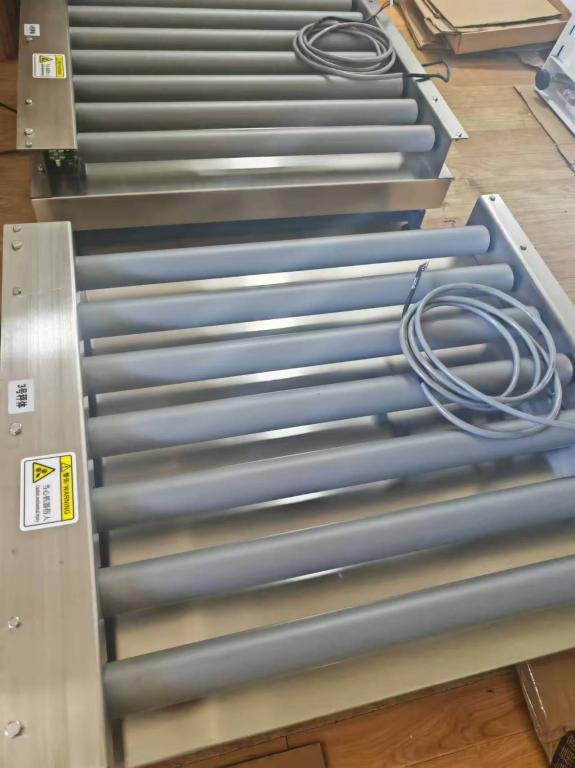
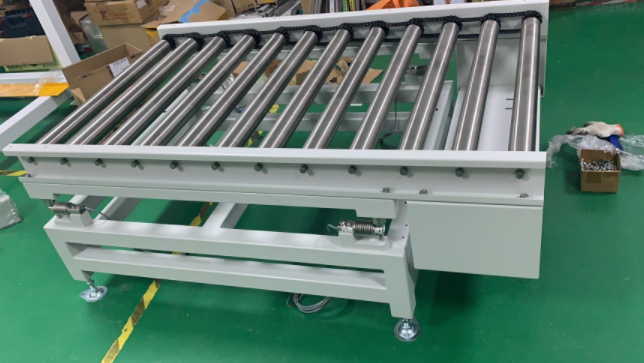
Pipeline roller electronic weighing machines typically consist of a weighing platform, roller assembly, load cell, signal processing circuit, display controller, and support frame. Among these, the weighing platform is the main component that carries the object, while the roller assembly is responsible for rolling and conveying the object on the platform to ensure stability and continuity during the weighing process. The load cell is the core component, responsible for converting the object's weight into an electrical signal. The signal processing circuit amplifies, filters, and converts these electrical signals to ensure accuracy and stability. The display controller is used to display weight values, set parameters, and perform fault diagnostics. The support frame is used to stabilize the entire weighing system, ensuring its reliability.
The design of pipeline roller electronic weighing machines fully considers the harsh conditions of industrial environments, utilizing high-strength, corrosion-resistant materials and advanced manufacturing processes. Additionally, they incorporate various protective measures, such as overload protection, short-circuit protection, and lightning protection, to ensure safe and stable operation under adverse conditions.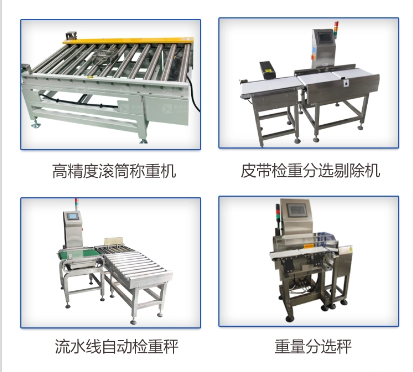
### Application Areas
Pipeline roller electronic weighing machines are widely used in various industries, including food, pharmaceuticals, chemicals, and logistics. In the food industry, they are used to weigh packaged foods to ensure each package meets standard weight requirements. In the pharmaceutical industry, they are employed to weigh bottled or boxed medications to prevent underfilling or overfilling. In the chemical industry, they are used to weigh raw materials or finished products for precise batching and feeding. In the logistics industry, they are utilized to measure the weight of packages or goods for freight calculation and logistics scheduling.
### Selection and Configuration
When selecting a pipeline roller electronic weighing machine, several factors must be considered, such as weighing range, accuracy requirements, working environment, and conveyor speed. The weighing range should be determined based on the maximum weight of the objects to be weighed to ensure the device meets production needs. Accuracy requirements should be set according to product quality standards and production demands to ensure measurement reliability. The working environment, including temperature, humidity, and corrosiveness, can affect the device's performance and lifespan. Conveyor speed should align with the production line's pace to ensure synchronized operation.
Additionally, the device's configuration and features must be considered. For example, is a printer needed to generate weight reports? Is a data interface required for communication with computers or PLCs? Is an alarm system necessary to alert when weights exceed standards or anomalies occur? These configurations and features should be selected based on actual needs and budget constraints.
### Maintenance and Care
As a precision industrial device, pipeline roller electronic weighing machines require regular maintenance and care to ensure long-term stable operation. Maintenance tasks primarily include cleaning, inspection, and calibration. Cleaning should be performed regularly to remove dust and dirt from the device's surface, preventing any impact on performance and accuracy. Inspections should cover the condition of all components, the tightness of connections, and the functionality of sensors. Any abnormalities should be addressed promptly. Calibration is essential for maintaining accuracy and should be conducted periodically following the manufacturer's guidelines.
For care, avoid exposing the device to excessive impact or vibration, as this can affect its performance and lifespan. Additionally, prolonged exposure to high temperatures, humidity, or corrosive environments should be avoided to prevent damage. If the device is not in use for an extended period, store it in a dry, ventilated environment and perform regular inspections and maintenance to keep it in good condition.
### Development Trends and Outlook
With the continuous advancement of industrial automation technology, pipeline roller electronic weighing machines are constantly being updated and upgraded. In the future, these machines will focus more on intelligence, networking, and integration. In terms of intelligence, more sensors and actuators will be introduced to enable automatic control and self-diagnosis of faults. For networking, data interfaces and communication protocols will facilitate connectivity and data sharing with computers or PLCs. Integration will involve collaboration with other automation devices to achieve more efficient production processes and quality control.
Simultaneously, with the emergence and application of new materials and technologies, the performance of pipeline roller electronic weighing machines will further improve. For instance, higher-precision sensors and advanced signal processing algorithms will enhance measurement accuracy and stability. More corrosion-resistant and wear-resistant materials will extend the device's lifespan. Energy-efficient and environmentally friendly designs will reduce energy consumption and emissions.
In summary, pipeline roller electronic weighing machines are indispensable in industrial automation production, playing a vital role in improving efficiency and ensuring product quality stability. In the future, with ongoing technological progress and expanding application areas, these machines will enjoy broader development prospects and application opportunities. Roller electronic weighing machines will embrace even wider development prospects and application spaces.
| Industry Category | Hardware & Tools/Cutting Power Tools/Drill Bits |
|---|---|
| Product Category | |
| Brand: | 桤亚 |
| Spec: | GW/C |
| Stock: | 2 |
| Manufacturer: | 上海桤亚科技 |
| Origin: | 113117 |


